
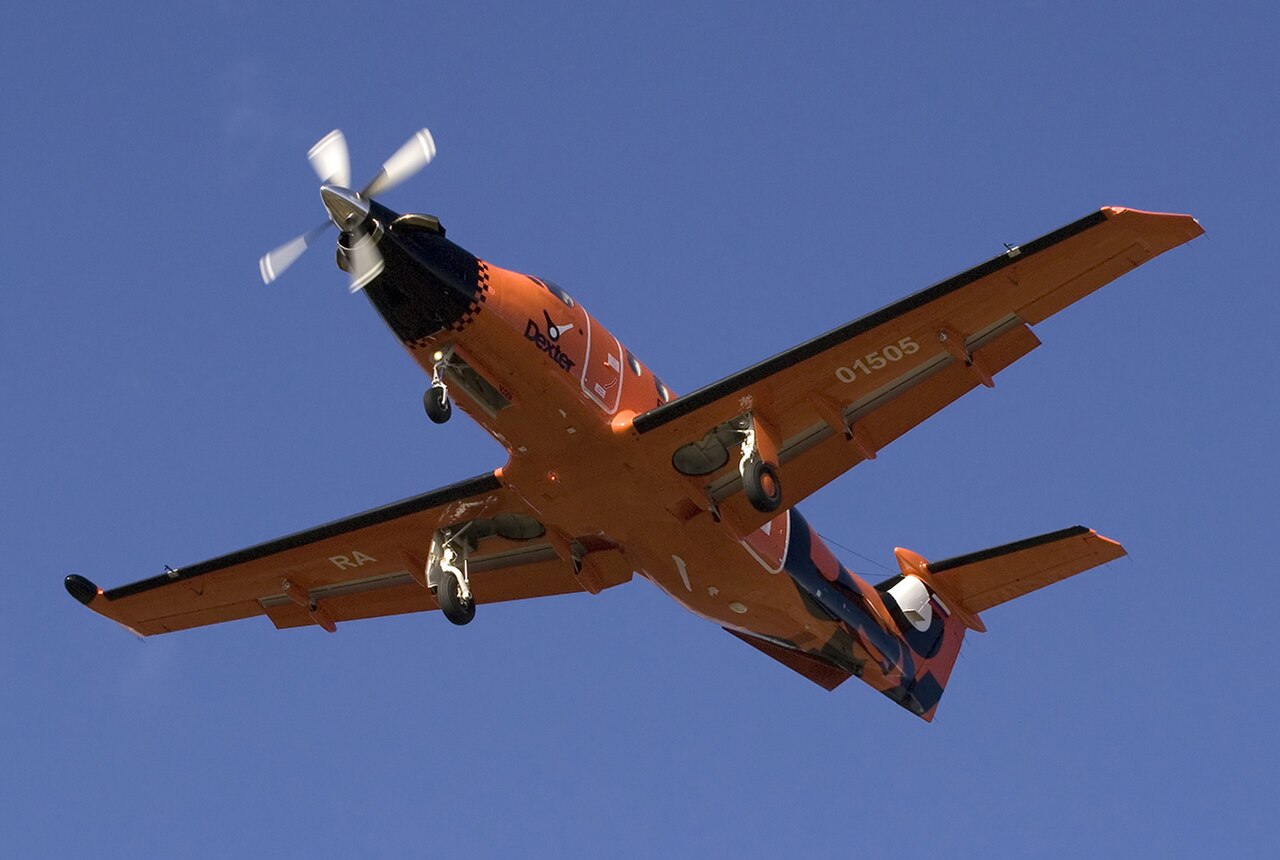
Pilatus PC-12 recurrent training at 5X5 Aviation is a two-day course in your own aircraft: day one pairs a ground review of systems, avionics and emergencies with a first flight, and day two is in-aircraft scenario flying. It keeps your insurance current, satisfies the FAA BFR and IPC, and costs $3,000 for one pilot or $5,000 for two, plus expenses.
The Pilatus PC-12 rewards pilots who fly it often and stay sharp on the details. A well-run recurrent course keeps your insurance current, satisfies FAA BFR and IPC, and actually makes you a better PC-12 captain. Here's exactly what our two-day in-aircraft recurrent looks like.
Every recurrent is tailored — your airframe, your avionics, your routes — but the shape of the two days is consistent. Here's the day-by-day, the scenarios we drill, how we adapt for NG vs NGX panels, and the paperwork your insurer expects at the end.
Day 1 — ground and scenario planning
Half a day of tailored ground review — your panel, your routes, and the systems questions that have been nagging you. We rebuild your PT6A knowledge, walk through the pressurization and environmental schedule, and pressure-test your emergency memory items. No generic slide decks; every discussion is specific to how you fly.
Ground closes with scenario planning for the afternoon and day two — I want to know what you're least comfortable with, what your last insurance renewal flagged, and which airports on your regular schedule deserve a fresh look. That's what we fly.
Day 2 — in-aircraft drills and debrief
Scenario-based flying that targets the weak spots we uncover in ground. A typical Day 2 covers:
- Emergency descent from cruise altitude
- Unusual attitude recovery with the autopilot in unusual states
- Engine-out procedures — real feathering practice at safe altitude
- An approach to minimums, hand-flown
- A circle-to-land at a familiar field
- At least one realistic system failure at exactly the wrong moment
We fly, land, debrief, fly again. If your insurer requires two-pilot ops, we drill CRM callouts and standardized procedures until they feel automatic.
Scenarios we train — with reasons
Insurance-approved recurrent isn't a maneuvers list, it's a judgment workout. Scenarios I lean on for PC-12 recurrent:
- Smoke in the cockpit — memory items, checklist discipline under stress, and the divert decision
- Precautionary landing — you've got a problem, not an emergency; where do you go, and how do you brief the passengers?
- Single-pilot IFR in real weather — high workload approach with a hold, a re-clearance, and a passenger question at exactly the wrong time
- Runway excursion decision — the "we already touched down long" tree
- Autopilot failure at cruise — hand-fly, communicate, plan the descent
Adapting the syllabus for NG vs NGX
The airframes fly nearly identically; the panels don't. NG owners spend more time on Honeywell Apex quirks, envelope-protection behavior, and the specific failure modes of the older MFD layout. NGX owners get the ACE workload-reduction walkthrough, autothrottle behavior on approach, and the ESP interactions that surprise pilots transitioning up from an NG. If your aircraft has been retrofit or upgraded, tell me at booking and I'll shape the ground day around it.
Insurance paperwork
You leave with a signed certificate of completion referencing FAR 61.56 (BFR) and 61.57 (IPC), your specific PC-12 airframe, and the syllabus items covered. We'll copy your broker directly if you'd like — most policies close the file same day. For the underwriter's-eye view of training documentation, the TBM insurance requirements guide walks through the same framework — it applies to PC-12 owners nearly verbatim.
Why in-aircraft beats sim-only
Simulators are excellent for training scenarios that are dangerous or impossible to fly in the real airplane. Everything else — your panel, your quirks, your takeoff performance out of your home field on a hot day — is better trained where it actually matters. A sim-only refresher will satisfy most policies. Training in your aircraft will change how you fly it.
The one-page habit plan
At debrief, you get a single page: the habits worth flying with for the next twelve months. Two or three specific techniques, one systems review to run quarterly, and the discipline your next underwriter renewal will thank you for.
Ready to book? See the full turbine training program or schedule a call.